



Meyhanede Devrim | Revolution in the Tavern

Çok değer verdiğim bir arkadaşım, beni arayarak bir grup aydın arkadaşımızla siyaset konuşmak için düzenlediği yemekli toplantıya davet etti.
“Her şey yemek masasında hallolur” diye Kıbrıs’ta çok kullanılan bir söylem vardır. Bir muhabbet ortamında sorun çözmenin çok daha kolay olması sadece bizde değil, Avrupa’da da bilinen bir gerçekliktir.
1789 Fransız Devrimi’ni hazırlayan koşullarda, aydın burjuvaların kahvelerde ve barlarda yaptıkları toplantıların ne kadar önemli olduğu tarih kitaplarında anlatılır.
Devrim öncesi Fransız kahveleri, sadece kahve içilen yerler olmanın yanında, devrimci fikirlerin doğduğu, politik tartışmaların yaşandığı, halkın silahlanmaya çağrıldığı merkezlere dönüştü.
“Cafe de Foy” gibi yerler, cumhuriyetçi fikirlerin yayıldığı, halkı ayaklanmaya çağıran ve devrimin planlandığı yerlerin başında gelmekteydi.
Bu tarihsel gelişmeyi kitaplardan öğrenen aydınlarımız da İngilizlerin hazırladığı Annan Planı sonrası çareyi meyhanede buluşarak siyaset konuşup, tatmin olmakta bulmuştur. Meyhane sayısındaki patlama aslında bu gerçekliği bize bir kez daha hatırlatmaktadır.
Annan Planı referandumu sonrası, Kıbrıs Türk toplumu kendi içine dönmüş, toplumsal değil kişisel çıkarlara ve günü birlik yaşama daha fazla değer veren bir sosyal yapıya bürünmüştür.
“Bundan sonra hiçbir şey olmaz, neme lazım, bana ne, memleketi ben mi kurtaracağım, altında kalanın boynu kopsun, biz hiçbir şey başaramayız, Rumlar antlaşma istemez” anlayışı topluma sistemli bir şekilde işlenmiştir.
İngilizlerin hazırladığı Annan Planı’nın hayata geçmemesi, toplumsal yapımızı dizayn eden Ankara yönetiminin sistemli çabalarına katkı koyan siyasi partilerimizin desteği ile kendi içine dönen bencil bir toplumsal yapıyı doğurmuştur.
Herkes kendi çıkarının arkasında koşar olmuş, toplumsal kurtuluş yerine bireysel kurtuluşa yönelmiştir.
2010 -2011 yılında ortaya konan “Toplumsal Varoluş Mücadelesi” eylemleri, muhalefet olduğunu söyleyen siyasi partilerin gerçeklikten uzak, rejime hizmet eden söylem ve eylemleri ile söndürülmüştür.
Bu tarihten sonra, Kıbrıs Türk toplumunun Türkiye tarafından gasp edilen siyasal iradesini geriye alma, anayasanın geçici onuncu maddesini değiştirme, kurumlarımızın başına kendi yöneticilerimizi atama, sivilleşme, demokratikleşme, adamızın kuzeyine sistematik nüfus taşıyıp vatandaşlık dağıtmaya karşı söylem ve eylemler bitirilmiş, kendi kendini yönetme hedefinden sapılmıştır.
“O gitsin ben geleyim, yandaşlarıma dağıtayım” anlayışı ile hareket eden siyasi partilerimiz, adamızın kuzeyini koloni haline getiren Ankara patentli, sözde ekonomik paketleri hayata geçirme ve Ankara Hükümeti’nin gözüne girmeyi hedefleyen söylem ve eylemleri ile toplumu uyutmayı siyaset haline getirmişlerdir.
“Yapamıyorsunuz, yönetemiyorsunuz, biz gelirsek söyle yapacağız, böyle yapacağız” yalanları ile gün geçirilmektedir.
TC Elçiliği’nin organize ettiği, toplumsal güveni ortadan kaldırmaya yönelik eczacı, doktor ve öğretmenlere yapılan itibar suikastlarına bile kayıtsız kalınması, Ankara Hükümeti’nin gözünden düşmeye yönelik korkudan kaynaklanmaktadır.
Siyaset yapmak için ortaya çıkan partiler ve siyaset yapmaktan kaçan sendika ve sivil toplum örgütlerinin bu ortamda çare üretmeleri şöyle dursun, rejime hizmet ettikleri, artık açık açık görülmektedir.
Rejimin koltuklarında yer kapmak için parti kuyruğuna bağlı maşrapa olan ve bildiri patlatmaktan başka iş yapmayan sendikacıların bu ülkeye verecek hiçbir şeyleri yoktur.
Bu ortamda arkadaşımın davetine uyup, meyhanede buluştuk. O ne, tüm masalar tıklım tıklım dolu.
Sağcısı, solcusu, yolcusu, sendikacısı, memuru herkes devrim yapmaya gelmiş. Hızını alamayanlar, bebek arabasındaki bebekleri ile, küçücük çocukları ile alkollü ortamda, yaşları 18’den küçük öğrenciler rakı şişesine yumulmuş, ellerinde sigaraları keyif yapmakta.
“Özgürlük sorumluluktur” der Jan Jack Rousso ancak Kıbrıs’ın kuzeyinde idare olmadığından keyfilik özgürlük olmuş. Avrupa’da belli saatten sonra içki satışının yasak olduğu, yaşı küçük olanlara içki ve sigara satanlara çok ağır cezalar verildiği, bu rejimin umurunda bile değil.
Salla bayrağı, bildiriyi, nutku patlat, bol bol Rumlara söv, Türkiye yetkililerine yağ çek, hak arar görün, boyalı basında bol bol reklam yap, dini siyasete alet edip memleketin her tarafını cami doldurup hoparlörü sonuna kadar açıp ezan okut, borçlanarak maaş öde, hükümetçilik ve muhalefetçilik oynayıp, ülkeyi en çok senin sevdiğini söyle her şey tamam.
Etrafımdaki masalara baktıkça, aklıma 12 Eylül sonrası İstanbul Taksim’de türkü barlarda rakı şişeleri arasında devrim yapanlar geldi.
Ucuz solcular, barlarda devrim yapadursun, ABD – İsrail destekli tarihin en totaliter rejimi 23 yıldan beri Türkiye’nin başına çökmüş, aydınlarını, siyasetçilerini, yazarlarını, gazetecilerini suçsuz yere zindanlara atmış, bizi de siyasi rehine olarak elinde tutmaktadır.
Biz, masada devrim yapmayı değil, yukarıda yazılanlarla, ülkemizin kurtuluşu için neler yapılabileceğini konuştuk.
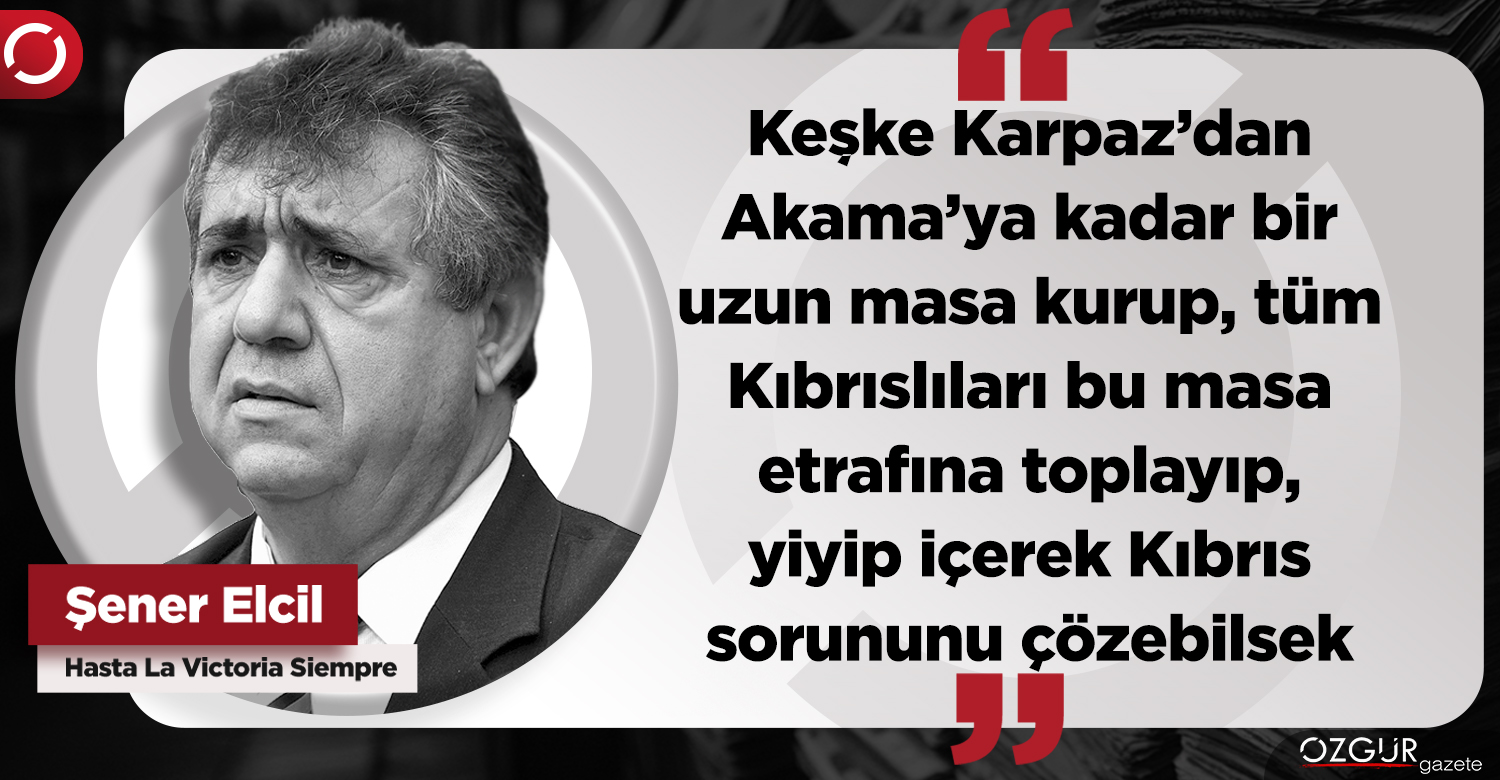
Tüm sorunlar yemek masasında çözülür der eskiler. Keşke Karpaz Burnundan, Akama Burnu’na kadar bir uzun masa kurup, tüm Kıbrıslıları bu masa etrafına toplayıp, yiyip içerek Kıbrıs sorununu çözebilsek.
***
Revolution in the Tavern
A close friend of mine called and invited me to a dinner gathering he had organized with a group of intellectual friends to discuss politics. In Cyprus, there is a commonly used saying: “Everything gets resolved around the dinner table.” The idea that problems are much easier to solve in a conversational atmosphere is not unique to us; it is also a well-known reality in Europe.
History books describe how important the meetings held by enlightened bourgeois intellectuals in cafés and bars were in creating the conditions that led to the 1789 French Revolution. Before the revolution, French cafés were not merely places where people drank coffee; they became centers where revolutionary ideas were born, political debates took place, and the public was called upon to arm itself. Places such as the “Café de Foy” were among the foremost locations where republican ideas spread, where people were encouraged to revolt, and where the revolution itself was planned. Our intellectuals, having learned about this historical development from books, found their own remedy after the British-prepared Annan Plan by gathering in taverns, talking politics, and satisfying themselves in that way. The explosion in the number of taverns once again reminds us of this reality.
After the referendum on the Annan Plan, the Turkish Cypriot community turned inward and adopted a social structure that valued personal interests and living day-to-day more than collective concerns. Ideas such as “Nothing will happen from now on,” “Why bother,” “What’s it to me,” “Am I the one who’s going to save the country?” “Every man for himself,” “We can never achieve anything,” and “The Greeks do not want an agreement” were systematically instilled into society.
The failure to implement the British-prepared Annan Plan, together with the support of our political parties that contributed to the systematic efforts of the Ankara administration in shaping our social structure, produced a selfish society turned inward. Everyone began chasing their own interests, seeking individual salvation rather than collective liberation.
The “Social Existence Struggle” protests of 2010–2011 were extinguished by the unrealistic rhetoric and actions of political parties claiming to represent the opposition while actually serving the regime. After this period, efforts and discourse aimed at reclaiming the political will of the Turkish Cypriot community that had been usurped by Turkey, amending the temporary Article 10 of the constitution, appointing our own administrators to head our institutions, promoting civilian rule and democratization, and opposing the systematic transfer of population and distribution of citizenship in the north of the island all came to an end. The goal of self-governance was abandoned.
Acting with the mentality of “Let them go so I can come and distribute benefits to my supporters,” our political parties turned politics into a means of lulling society to sleep through Ankara-patented so-called economic packages that transformed the north of our island into a colony, while aiming to gain the favor of the Ankara government. Days pass with empty promises such as “You are incapable, you cannot govern; if we come to power, we will do this and that.” Even the silence in the face of the smear campaigns organized by the Turkish Embassy against pharmacists, doctors, and teachers — campaigns designed to destroy public trust — stems from fear of falling out of favor with the Ankara government.
Far from producing solutions in this environment, the political parties established to engage in politics, along with unions and civil society organizations that avoid political action, are now openly seen to be serving the regime. Union leaders who act merely as ladles attached to party queues in hopes of securing positions within the regime, and who do nothing beyond issuing statements, have nothing to offer this country.
In this atmosphere, I accepted my friend’s invitation and we met at the tavern. What a sight — every table was packed. Right-wingers, left-wingers, unionists, civil servants — everyone had come to stage a revolution. Some even brought babies in strollers and tiny children into the alcohol-filled environment. Students under the age of eighteen were throwing themselves at bottles of rakı, smoking cigarettes in their hands and enjoying themselves. Jean-Jacques Rousseau said, “Freedom is responsibility,” but in northern Cyprus, where there is no proper administration, arbitrariness has become freedom. The fact that alcohol sales are prohibited after certain hours in Europe, and that severe penalties are imposed on those who sell alcohol and cigarettes to minors, is of no concern whatsoever to this regime. Wave the flag, issue statements, deliver fiery speeches, curse the Greeks endlessly, flatter Turkish officials, pretend to defend rights, advertise constantly in the partisan press, exploit religion for politics by filling every corner of the country with mosques and blasting the call to prayer through loudspeakers at full volume, pay salaries through debt, play at government and opposition politics, and proclaim yourself the greatest patriot — then everything is supposedly fine.
As I looked around at the surrounding tables, I was reminded of those who “made revolution” among bottles of rakı in the folk bars of Istanbul’s Taksim district after the September 12 coup. While cheap leftists continue staging revolutions in bars, the most totalitarian regime in history — supported by the United States and Israel — has ruled Turkey for twenty-three years, unjustly imprisoning intellectuals, politicians, writers, and journalists, while also holding us as political hostages.
Instead of making revolution at the table, we discussed what could actually be done to save our country in light of everything written above. The old saying goes that all problems are solved around the dinner table. If only we could set up one long table stretching from Cape Karpaz to Cape Akamas, gather all Cypriots around it, and solve the Cyprus problem while eating and drinking together.